

Posted on Thursday, February 26th, 2026 at 1:00 pm
Can I Sue a Fayetteville Store for a Wet Floor Injury?
Slipping on a wet floor in a Fayetteville store can lead to serious injuries, medical bills, and lost wages. When a store fails to maintain safe conditions for customers, Georgia law provides a path to hold them accountable. Understanding your rights under Georgia’s premises liability law is crucial to determining whether you have a valid claim against the store.
If you’ve been injured in a wet floor accident at a Fayetteville store, Jonathan R. Brockman, P.C. can help evaluate your case. Call 770-670-5794 or contact us now for a free consultation to discuss your legal options.
Understanding Your Rights Under Georgia Premises Liability Law
Georgia law provides specific protections for customers injured due to unsafe conditions in stores. Under O.C.G.A. § 51-3-1, property owners who invite customers onto their premises have a legal duty to exercise ordinary care in keeping those premises safe. This statute applies directly to all Fayetteville stores, requiring them to maintain reasonably safe conditions for shoppers. The law recognizes that when a business opens its doors to the public, it accepts responsibility for maintaining a safe environment.
Store owners in Fayetteville must actively work to identify and address hazardous conditions like wet floors. This duty extends beyond simply cleaning up spills when discovered. It includes implementing reasonable inspection procedures, promptly addressing known hazards, and warning customers of dangers that cannot be immediately remedied. The standard is ordinary care, what a reasonable store owner would do under similar circumstances.
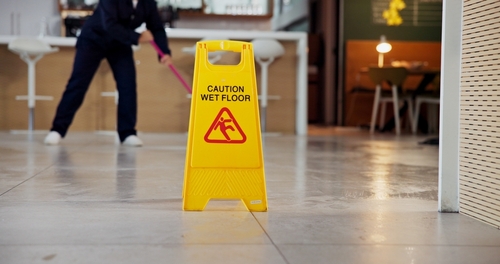
What Makes a Store Liable for Wet Floor Accidents
The key to any successful wet floor injury claim in Georgia is proving the store had notice of the dangerous condition. Georgia courts consistently hold that liability depends on whether the store had actual or constructive notice of the hazard before the accident occurred. Actual notice means store employees knew about the wet floor. Constructive notice applies when the condition existed long enough that reasonable inspection procedures would have discovered it.
Several factors help establish whether a Fayetteville store should have known about a wet floor hazard. These include the length of time the condition existed, whether the hazard was in a high-traffic area where employees regularly pass, and whether the store had adequate inspection procedures in place. For instance, if surveillance footage shows a spill existed for 30 minutes in a busy aisle without being addressed, this could establish constructive notice.
💡 Pro Tip: Always report your accident to store management immediately and request that an incident report be created. Ask for a copy of this report and take photos of the wet floor condition if possible, as this documentation can be crucial evidence in establishing the store’s notice of the hazard.
Types of Injuries From Wet Floor Accidents
Wet floor accidents in retail environments can cause a wide range of injuries, from minor bruises to life-altering conditions. According to national injury surveillance data, falls represent a significant portion of emergency department visits each year. The NEISS-AIP system, which tracks injury-related emergency department cases, collects data from approximately 500,000 cases annually to provide national context for understanding injury patterns.
Common injuries from store slip-and-fall accidents include fractures, head injuries, and soft tissue damage. Hip fractures are particularly serious for older adults, often requiring surgery and extensive rehabilitation. Traumatic brain injuries can occur when victims strike their heads during a fall. Back injuries, including herniated discs and spinal compression, may result in chronic pain and limited mobility. These injuries often require immediate medical attention and can lead to substantial medical expenses and time away from work.
How to Prove a Fayetteville Premises Liability Case
Building a strong premises liability case requires evidence demonstrating the store’s breach of its duty of care. Plaintiffs must show that a hazardous condition existed, the store knew or should have known about it, and the store failed to remedy the danger or warn customers. This often involves gathering surveillance footage, witness statements, and documentation of the store’s inspection and maintenance procedures.
Industry standards can play a crucial role in establishing whether a store met its duty of care. The National Floor Safety Institute has developed voluntary consensus standards that many retailers adopt for their safety programs. These standards, including walkway surface auditing procedures and wet surface testing methods, provide measurable benchmarks for floor safety. When a store fails to follow recognized safety standards, this evidence can support claims that they breached their duty to maintain safe premises.
💡 Pro Tip: Look for evidence of the store’s floor inspection logs and maintenance schedules during the discovery process. Many stores maintain written policies requiring hourly floor inspections, if these weren’t followed on the day of your accident, it strengthens your claim that the store failed to exercise ordinary care.
Time Limits for Filing Your Fayetteville Store Injury Claim
Georgia law imposes strict deadlines for filing premises liability lawsuits. The statute of limitations for personal injury claims in Georgia is generally two years from the date of injury. Missing this deadline typically results in losing your right to seek compensation, regardless of how strong your case might be. However, certain circumstances may affect this timeline, and courts interpret exceptions narrowly.
Starting your claim promptly helps preserve crucial evidence and strengthen your case. Surveillance footage may be deleted, witnesses’ memories fade, and physical evidence disappears over time. Early action also allows your attorney to send preservation letters to the store, requiring them to maintain relevant evidence. Additionally, beginning the process early provides more time to thoroughly investigate your claim and potentially negotiate a settlement without the pressure of an approaching deadline.
Compensation Available in Wet Floor Injury Cases
Victims of wet floor accidents in Fayetteville stores may recover various types of damages. Economic damages include medical expenses, both current and future, as well as lost wages and diminished earning capacity. These damages are typically proven through medical records, pay stubs, and expert testimony regarding future medical needs or career limitations resulting from the injury.
Non-economic damages compensate for the pain, suffering, and diminished quality of life caused by the injury. Georgia law recognizes that some losses cannot be measured in dollars but deserve compensation nonetheless. This includes physical pain, emotional distress, and loss of enjoyment of activities you once pursued. In cases involving particularly egregious conduct by the store, punitive damages may also be available, though these require showing the store acted with conscious indifference to safety.
Steps to Take After a Wet Floor Accident in a Fayetteville Store
Your actions immediately following a slip-and-fall accident can significantly impact your ability to recover compensation. First, seek medical attention for your injuries, even if they seem minor initially. Some injuries, particularly head trauma and soft tissue damage, may not show symptoms immediately. Document your injuries through medical treatment and follow all recommended care to avoid claims that you failed to mitigate damages.
Preserving evidence at the scene is crucial for building your case. Take photographs of the wet floor condition, including any warning signs (or lack thereof). Get contact information from witnesses who saw your fall or observed the hazardous condition. Report the incident to store management and request a copy of any incident report they create. Keep all receipts related to your injury, including medical bills, prescriptions, and transportation costs for medical appointments.
💡 Pro Tip: Be cautious about what you say to store employees or insurance adjusters after your accident. Avoid speculating about fault or downplaying your injuries. Statements like "I’m okay" or "I should have been more careful" can be used against you later, even if you were simply being polite or didn’t yet realize the extent of your injuries.
Why You Need a Fayetteville Premises Liability Attorney
Navigating Georgia’s premises liability laws requires understanding complex legal standards and procedures. An attorney with extensive experience in these cases knows how to investigate store safety practices, gather compelling evidence, and present your case effectively. They understand the specific steps needed to prove property owner negligence and can anticipate common defense strategies used by store insurance companies.
Insurance companies representing stores often work to minimize or deny valid claims. They may argue you were comparatively negligent, claim the hazard was "open and obvious," or dispute whether they had notice of the condition. An experienced Georgia premises liability lawyer can counter these tactics, properly value your claim, and negotiate for fair compensation. If necessary, they can take your case to trial to fight for the compensation you deserve.
Frequently Asked Questions
How long do I have to file a lawsuit after a wet floor injury in a Fayetteville store?
In Georgia, the statute of limitations for premises liability claims is typically two years from the date of your injury. However, certain circumstances may affect this deadline. Courts interpret exceptions to this rule narrowly, so it’s crucial to consult with an attorney promptly to ensure you don’t miss important deadlines. Waiting too long can result in losing your right to compensation entirely.
What if the store claims they didn’t know about the wet floor?
Under Georgia law, stores can be held liable if they had constructive notice of the hazard, meaning the condition existed long enough that they should have discovered it through reasonable inspection procedures. Your attorney can investigate how long the hazard existed, whether employees were in the area, and what inspection procedures the store had in place to establish constructive notice.
Can I still recover damages if I was partially at fault for my fall?
Georgia follows a modified comparative negligence rule. You can still recover damages if you were less than 50% at fault for your accident. However, your compensation will be reduced by your percentage of fault. For example, if you’re found 20% at fault for not noticing the hazard, your damages would be reduced by 20%.
What evidence do I need to prove my wet floor injury case?
Strong evidence includes photographs of the hazard, surveillance footage, witness statements, incident reports, medical records documenting your injuries, and evidence of the store’s notice of the condition. Documentation of the store’s inspection and maintenance procedures can also be valuable in showing whether they followed reasonable safety protocols.
Protecting Your Rights After a Fayetteville Store Injury
Suffering an injury from a wet floor in a Fayetteville store can disrupt your life with medical bills, lost wages, and ongoing pain. Georgia law provides clear protections for customers injured due to a store’s failure to maintain safe premises. Understanding these rights and taking prompt action to preserve evidence and meet legal deadlines is essential for protecting your ability to seek fair compensation. While stores and their insurers may try to minimize their responsibility, the law holds them accountable when they fail to exercise ordinary care in maintaining safe conditions for customers.
If you’ve been injured in a wet floor accident at a Fayetteville store, don’t navigate this complex legal process alone. Jonathan R. Brockman, P.C. has extensive experience helping injury victims throughout Georgia recover the compensation they deserve. Call 770-670-5794 today or schedule your free consultation online to discuss your case with a dedicated premises liability attorney who will fight for your rights.