

Posted on Friday, July 17th, 2026 at 1:01 pm
Understanding Visitor Access Rights in Georgia Long-Term Care Facilities
Key Takeaways: A Fayetteville nursing home generally cannot arbitrarily restrict a resident’s visitors, as Georgia law treats visitation as a protected right of self-determination. Residents have an affirmative right to choose their visitors, and every adult resident may designate an essential caregiver who must be allowed physical presence at all times. These rights are reinforced by the federal 1987 Nursing Home Reform Law. Facilities may impose only narrow, statutorily defined limits, such as reasonable safety protocols, facility-supplied PPE requirements, restricting disruptive visitors, or confining access away from clinical areas. When restrictions appear improper, families can voice concerns without fear of retaliation, contact the Long-Term Care Ombudsman or state survey agencies, and document each denied visit. Because outcomes depend on specific facts, consulting an experienced attorney can help determine whether a restriction is lawful or an unlawful overreach.
When a loved one lives in a nursing home, being told you cannot visit can feel alarming and unjust. A Fayetteville nursing home generally cannot arbitrarily restrict a resident’s visitors because visitation is protected as a matter of resident self-determination. Individuals in long-term care facilities maintain the same rights as those in the larger community, including the right to receive chosen visitors. Georgia law permits limitations only in narrow, defined situations, and facilities that ignore those boundaries may be violating the law.
If your family is facing wrongful denial of access or suspected mistreatment, the team at Jonathan R. Brockman, P.C. is ready to listen. Call 770-670-5794 to speak with someone about your situation, or request a free case evaluation to learn how Georgia’s resident-rights laws may apply.
💡 Pro Tip: If turned away at the door, ask the facility to identify the specific written policy or statute authorizing the restriction. Vague explanations are often a red flag.
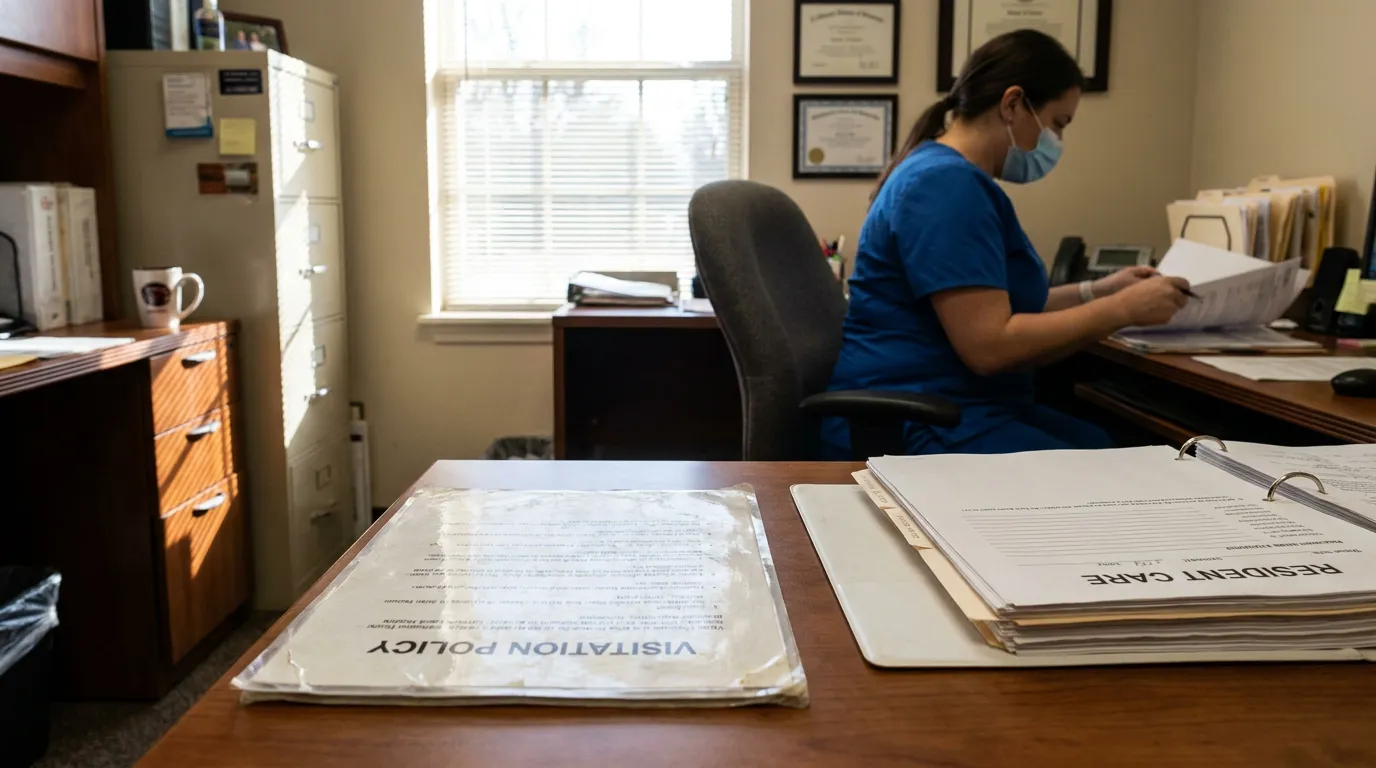
What Georgia Law Says About Nursing Home Visitation
Georgia treats visitation as a legally protected right rather than a courtesy facilities can grant or withhold at will. State law defines the facilities that must honor these rights broadly. "Long-term care facility" means any skilled nursing home, intermediate care home, personal care home, assisted living community, community living arrangement, or inpatient hospice facility subject to regulation and licensure by the department, which means a Fayetteville Georgia nursing home falls squarely within these obligations.
These protections also carry a federal foundation that reinforces state law. Residents’ Rights are guaranteed by the federal 1987 Nursing Home Reform Law, which requires nursing homes participating in Medicare and Medicaid to promote and protect each resident’s rights. The National Long-Term Care Ombudsman residents’ rights resources provide more information. This dual framework means Fayetteville residents are protected on two levels.
Your Right to Choose Your Own Visitors
Residents hold an affirmative right to decide who visits them. The rights recognized in long-term care include visits by relatives, friends, and others of the residents’ choosing, as well as by a personal physician and state survey and ombudsman representatives. This places the decision with the resident, not administrators. A facility that broadly bars a resident’s chosen guests is generally acting outside its authority.
This right is anchored in a resident’s broader legal standing. Under Georgia Code § 31-8-102(5), "resident" means any person receiving treatment or care in any long-term care facility, and such resident shall be entitled to exercise all rights provided except as limited by a court of competent jurisdiction or applicable law. Only a court or specific law, not a facility’s preference, can strip these visitation rights away.
The Essential Caregiver Designation
Georgia gives every adult resident the right to name an essential caregiver who must be allowed inside. Under Georgia Code § 31-7-431(b), an adult admitted to a hospital or long-term care facility shall have the right to have a designated essential caregiver who shall be allowed to be physically present at all times. This is a protected right, not a privilege staff may casually deny.
That said, the designation comes with reasonable conditions. The essential caregiver must follow the facility’s safety protocols and rules of conduct. The right guarantees presence and access; it does not exempt a caregiver from legitimate, evenly applied safety measures.
💡 Pro Tip: Put the essential caregiver designation in writing and keep a dated copy. Documentation makes it harder for a facility to later claim no caregiver was named.
Things Nursing Homes Are Not Allowed to Do With Visitation
Among the things nursing homes are not allowed to do is impose blanket or arbitrary bans on a resident’s visitors. Georgia law describes the limited situations in which a facility may restrict visitation. Under Georgia Code § 31-7-432, a facility may limit or restrict visitation only when:
- The visitor’s presence would be medically or therapeutically contraindicated by healthcare professionals
- The visitor would interfere with the care or rights of any other patient or resident
- The visitor engages in disruptive, threatening, or violent behavior
- The visitor is noncompliant with facility policy
- The resident is under the custody of a law enforcement agency or correctional institution
Outside those defined grounds, arbitrary restrictions are not authorized. A facility that invents its own reasons to keep family away may be exposing itself to a nursing home violations Georgia complaint.
The rules for cutting off an essential caregiver are equally narrow. Under Georgia Code § 31-7-431(d), a facility may suspend or terminate a designated essential caregiver’s access only under six circumstances: upon the resident’s request, for noncompliance with facility policy, for failure to comply with reasonable safety protocols, if the caregiver presents a substantial health or safety risk, if the resident is in law enforcement custody, or upon court order.
When Visitation Restrictions Are Actually Permitted
Not every restriction is unlawful, and recognizing legitimate limits helps families respond wisely. Georgia law allows facilities to require reasonable safety measures. Under Georgia Code § 31-7-432(b), a hospital or long-term care facility may require visitors to wear personal protective equipment, provided that any such required equipment shall be provided by the facility, and may require visitors to comply with reasonable safety protocols and rules of conduct. Such protocols must be reasonable and consistently applied, not used as a pretext to unlawfully bar someone.
Facilities may also limit where visitors go. Under Georgia Code § 31-7-432(c), nothing in the Code section shall be construed to require a facility to allow a visitor to enter an operating room, isolation room, isolation unit, behavioral health setting, or other typically restricted area. Access can lawfully be confined to the resident’s specific room or unit.
| Generally Permitted | Generally Not Permitted |
|---|---|
| Requiring facility-supplied PPE | Blanket bans with no stated legal basis |
| Reasonable, evenly applied conduct rules | Selectively enforcing rules to exclude family |
| Limiting access to restricted clinical areas | Barring a caregiver outside the six statutory grounds |
| Restricting a disruptive or threatening visitor | Denying a resident’s chosen visitors arbitrarily |
💡 Pro Tip: Reasonable and consistently applied are the operative words. If a rule is enforced against one family but not others, that uneven treatment may signal an unlawful pretext.
How Families Can Respond to Improper Restrictions
If you believe a restriction is unlawful, Georgia law protects your right to speak up. Residents and their families may voice concerns or file complaints without fear of punishment, and may contact Long-Term Care Ombudsmen or state survey agencies for support. These administrative avenues operate separately from civil lawsuits, though both can matter.
Documentation and notice requirements often work in a family’s favor. Under Georgia Code § 31-8-104, each resident and his guardian or representative shall be given written and oral explanation of the rights, grievance procedures, and enforcement provisions before or at admission. Requesting that acknowledgment can reveal whether the facility followed its obligations. When restrictions appear tied to broader neglect, review the guidance on when to involve counsel for nursing home negligence concerns.
💡 Pro Tip: Keep a log of every denied visit, including dates, times, and the staff member’s name who turned you away. A clear timeline strengthens both an ombudsman complaint and any later legal review.
Because outcomes depend heavily on specific facts, general information is not a substitute for tailored advice. Families weighing their options often benefit from speaking with a firm experienced in Premises Liability in Fayetteville Georgia matters to understand how the law applies to their circumstances.
Frequently Asked Questions
-
Can a Fayetteville nursing home ban all visitors indefinitely?
Generally, no. Georgia law permits restrictions only under the narrow circumstances listed in Georgia Code § 31-7-432, and a blanket, open-ended ban with no statutory basis is typically not authorized.
-
What is a designated essential caregiver?
Under Georgia Code § 31-7-431(b), it is a person a resident names who must be allowed to be physically present at all times during the stay. The caregiver must still follow reasonable safety protocols and rules of conduct.
-
Can a facility require my family to wear PPE before visiting?
Yes. Georgia Code § 31-7-432(b) allows facilities to require personal protective equipment, but the facility must supply it, and the requirement must be reasonable and applied consistently.
-
Who can I contact if I think visitation was wrongly denied?
You may contact the Long-Term Care Ombudsman or a state survey agency without fear of retaliation. These administrative options are separate from a civil claim.
-
Does limiting me to my relative’s room violate their rights?
Not necessarily. Under Georgia Code § 31-7-432(c), facilities may confine visits to the resident’s room or unit and exclude restricted clinical areas, so geographic limits alone generally do not amount to a violation.
Protecting Your Loved One’s Rights in Fayetteville
Georgia law places the power to choose visitors largely with the resident, and sharply limits when a facility may interfere. From the right to receive relatives and friends, to the essential caregiver designation, to the narrow list of lawful restrictions, the statutes are designed to protect dignity and self-determination. When a Fayetteville nursing home ignores those boundaries, families have both administrative and legal paths to respond.
If your family is confronting restricted visitation, suspected neglect, or other elder care rights concerns, the attorneys at Jonathan R. Brockman, P.C. are prepared to help. Call 770-670-5794 today, or submit a request through the firm’s free consultation form to take the next step toward protecting the person you love.