
Posted on Tuesday, July 14th, 2026 at 1:00 pm
Understanding Rideshare Injury Coverage in Georgia
Key Takeaways: After an Atlanta Uber passenger injury, medical bills are typically paid by the at-fault party’s insurance, which may be Uber’s commercial policy, another driver’s insurer, or a combination. Passengers are rarely at fault, and Georgia’s modified comparative negligence rule generally supports recovery. Uber’s $1 million liability policy applies during both the ‘en route to pick-up’ and ‘passenger in vehicle’ periods (Periods 2 and 3). Coverage depends on the rideshare insurance period, and Uber’s commercial policy does not require waiting for the driver’s personal insurer to deny a claim first. Recoverable medical expenses are limited to the reasonable value of medically necessary care. Prompt accident reporting and preserving trip records protect your right to compensation, with final recovery depending on fault, coverage period, and case specifics.
When you are hurt as a passenger in an Uber, the question of who pays your medical bills rarely has a single answer. Payment typically comes from the at-fault driver’s insurance policy. Because rideshare trips involve layered coverage, that may be Uber’s commercial policy, another motorist’s insurance, or a combination. As a passenger, you are almost never at fault, which strengthens your ability to pursue compensation for medically necessary care.
If you are navigating an Atlanta Uber passenger injury and feel overwhelmed by the insurance maze, Jonathan R. Brockman, P.C. is ready to help. Call our office at 678-498-1574 or request a free case evaluation to discuss your claim.
What Happens If Your Uber Gets in an Accident in Atlanta
Knowing what happens if your Uber gets in an accident starts with understanding that you have a legal right to pursue a claim. Under Georgia law, an Uber driver owes passengers a legal duty of care, and if that duty is breached through negligent driving causing a crash, the passenger has a right to bring a civil claim for resulting injuries and medical bills. This duty is codified at O.C.G.A. § 51-1-36.
More than one driver may share responsibility for your injuries. If another motorist caused the collision, that person’s liability insurance may be the primary recovery source. If your Uber driver was negligent, coverage shifts to policies connected to the rideshare trip. Determining fault is fact-intensive and depends on each Uber Accident in Atlanta’s specific circumstances.
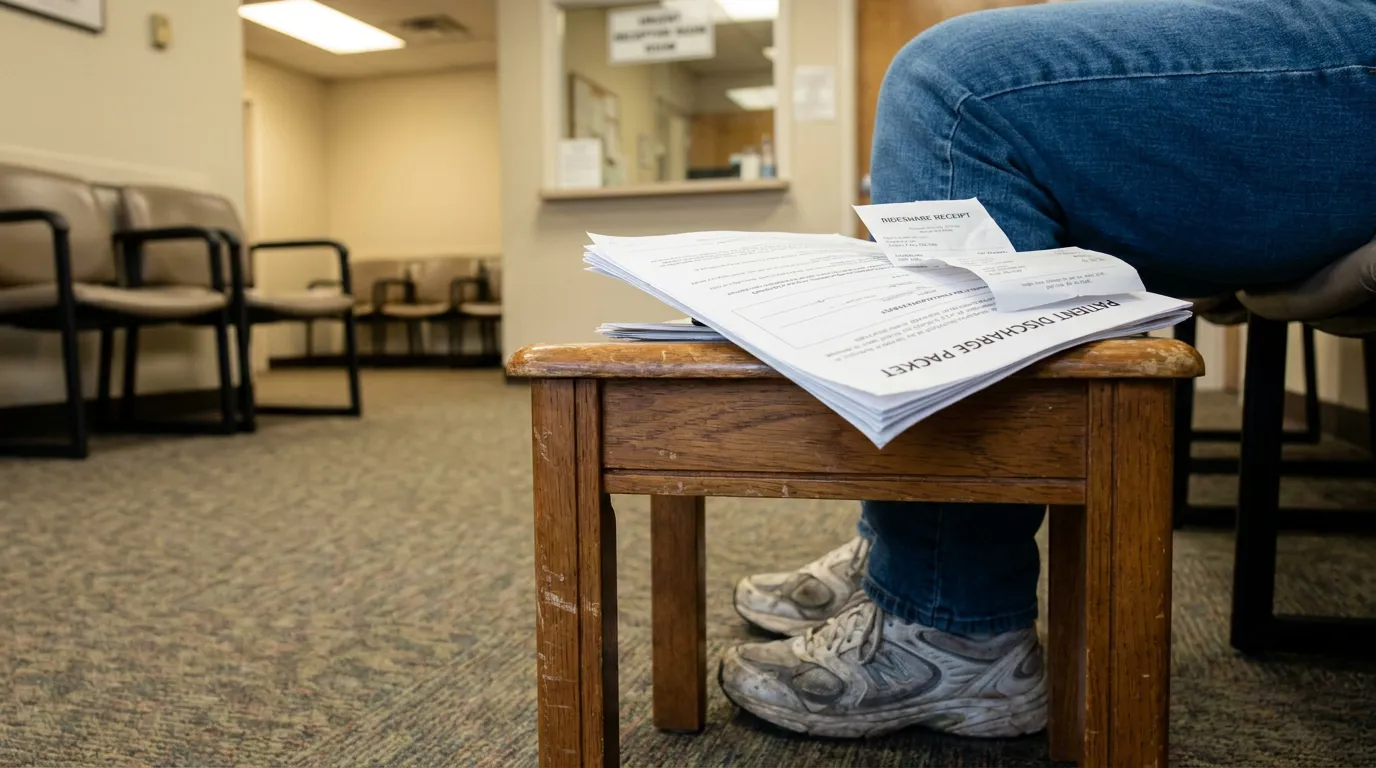
💡 Pro Tip: Save your ride receipt and screenshots of the trip in the Uber app immediately after a crash. These records help confirm the exact time and status of your trip, which can be decisive when insurers dispute coverage.
How Georgia’s Rideshare Insurance Periods Determine Payment
Georgia rideshare insurance is divided into distinct periods that directly affect available coverage. The insurance that applies depends on what the driver was doing at the crash moment. As a passenger, your trip almost always falls into the highest-coverage window.
The three periods are:
- Period 1: The app is on, but the driver has not accepted a ride request. (This period generally carries only limited contingent liability coverage of $50,000 per person / $100,000 per accident / $25,000 in property damage.)
- Period 2: The driver has accepted a ride and is traveling to pick up a passenger (Uber’s $1 million liability policy applies during Periods 2 and 3).
- Period 3: A passenger is in the vehicle; Uber’s $1 million liability policy also applies.
Confirming which period applies requires proof of when the driver logged on and off the app. Georgia law requires Uber to provide the driver’s log-on and log-off times within 15 days of a personal insurer’s request. O.C.G.A. § 33-1-24(h)(4) directs the transportation network company to provide the date and precise times surrounding the accident.
An important protection for injured passengers is that Uber’s commercial coverage does not wait behind the driver’s personal insurer. Under O.C.G.A. § 33-1-24(h)(4), coverage under the rideshare company’s policy is not dependent on a personal insurer first denying a claim. This means the $1 million liability policy may be directly accessible without processing through the driver’s personal insurance first.
Why the Driver’s Personal Policy May Not Help You
Many injured passengers assume the Uber driver’s personal auto insurance will cover their care, but that assumption can be costly. Georgia law requires rideshare companies to disclose to drivers that a personal policy may exclude coverage for injuries during rideshare services. O.C.G.A. § 33-1-24(h)(1)(B) requires notice that the driver’s personal insurance may exclude coverage while providing transportation network company services. Relying on the driver’s personal policy alone is not a reliable strategy.
Proving Negligence to Recover Your Medical Bills
To hold any party financially responsible, you must prove the elements of negligence. An injured passenger must establish that the defendant owed a legal duty, breached that duty when conduct fell below the reasonably prudent standard, and that the breach caused actual injury. You can review the elements of negligence to understand how fault is assessed.
Georgia’s comparative fault rule also plays a role, though it rarely disadvantages passengers. Georgia follows modified comparative negligence under O.C.G.A. § 51-12-33, meaning an injured party can recover compensation only if they are 49% or less at fault. Since passengers are seldom responsible for a crash, this framework generally supports a strong Uber injury claim in Georgia.
💡 Pro Tip: Keep a symptom journal starting the day of the crash. Documenting how injuries affect your daily life creates a contemporaneous record that supports both your medical necessity and your damages.
What You Can Actually Recover for Medical Expenses
Recovering medical costs in Georgia is not simply a matter of adding up every bill you receive. In a Georgia Uber injury claim, recoverable medical bills are limited to the reasonable value of medically necessary care. Under O.C.G.A. § 51-12-1.1(b), special damages for medical expenses are limited to the reasonable value of medically necessary care, and the trier of fact decides what is reasonable. This is why thorough documentation of treatment and billing is critical.
If you use your own health insurance to pay for care, Georgia law changes what evidence the jury sees. Under O.C.G.A. § 51-12-1.1(c), evidence relevant to the reasonable value of care includes both amounts charged and amounts actually necessary to satisfy charges under the insurance contract. This statute, applying to causes of action arising on or after April 21, 2025, expressly abrogates the traditional collateral source rule to admit that evidence, allowing the at-fault party’s insurer to argue that amounts actually necessary to satisfy your bills were lower than billed amounts.
Some Atlanta patients treat under a letter of protection, which carries disclosure obligations. Under O.C.G.A. § 51-12-1.1(d), a copy of the letter of protection and all itemized charges become relevant and discoverable, including whether the receivable was sold to a third party.
💡 Pro Tip: Ask every provider for itemized billing statements rather than summary balances. Itemized records make it far easier to demonstrate that each charge reflects medically necessary treatment.
Health Insurers Generally Cannot Refuse Doctor-Ordered Care
Georgia law narrowly protects coverage for treatment of terminal conditions. Under O.C.G.A. § 33-24-59.18(b), no health benefit plan shall refuse to pay or otherwise reimburse for treatment of a terminal condition (a disease or illness diagnosed as expected to result in death within 24 months or less), including any drug or device, so long as such end-of-life care is consistent with best practices for the treatment of the terminal condition and is supported by peer-reviewed medical literature. For most Atlanta Uber accident victims with non-terminal injuries, this statute will not apply; it specifically addresses coverage obligations for terminal conditions.
Reporting and Documentation Requirements After a Crash
Prompt reporting is both a legal obligation and a practical safeguard for your claim. Under O.C.G.A. § 40-6-273, a driver involved in an accident resulting in injury, death, or property damage of $500 or more must immediately notify the local police department if the crash occurs within a municipality like Atlanta. You can read the accident reporting statute to understand driver obligations.
Reporting can also matter when injuries exceed available liability coverage. Georgia courts have treated prompt accident reporting under this statute as a condition precedent to recovering uninsured or underinsured motorist benefits under O.C.G.A. § 33-7-11(c).
Passengers seeking deeper understanding can benefit from focused guidance. Our overview of passenger rights after an Uber crash explains how riders fit into the broader claims process.
💡 Pro Tip: Request a copy of the official police report as soon as it becomes available. Insurers frequently rely on it, and correcting errors early can prevent disputes over fault later.
Frequently Asked Questions
-
Does Uber’s insurance always cover my medical bills as a passenger?
Not automatically, but coverage is often available during an active trip. Uber’s $1 million liability policy generally applies during Periods 2 and 3 (when the driver is en route to pick up a passenger or transporting them). Period 1, when the app is on but no ride has been accepted, generally carries only limited contingent liability coverage ($50,000 per person / $100,000 per accident / $25,000 in property damage). O.C.G.A. § 33-1-24(h)(4) confirms that rideshare coverage is not dependent on a personal insurer first denying a claim.
-
Can I recover compensation if I was partially at fault?
In most passenger cases, fault is not an obstacle. Under Georgia’s modified comparative negligence rule in O.C.G.A. § 51-12-33, you may recover if you are 49% or less responsible. Because passengers rarely contribute to a crash, this generally supports recovery.
-
What if my Uber driver’s personal insurance denies my claim?
A denial from the personal policy does not end your options. Georgia law requires rideshare companies to warn drivers that personal policies may exclude rideshare-related injuries under O.C.G.A. § 33-1-24(h)(1)(B). Commercial rideshare coverage may still apply to your Atlanta Uber crash coverage question.
-
How much of my medical bills can I actually recover?
You can generally recover the reasonable value of medically necessary care. O.C.G.A. § 51-12-1.1(b) limits recovery to that reasonable value, and the jury decides what qualifies. Detailed billing and treatment records are essential.
-
Do I need to report the accident even as a passenger?
The driver bears the primary reporting duty, but documentation protects you. O.C.G.A. § 40-6-273 requires notice to local police for qualifying crashes within Atlanta, and prompt reporting can matter for uninsured motorist benefits. Confirming that a report was filed is wise.
Protecting Your Right to Compensation
Determining who pays medical bills after an Atlanta Uber passenger injury depends on fault, the applicable insurance period, and careful documentation of your care. Georgia’s layered rideshare coverage, comparative negligence rules, and statutory limits on recoverable medical expenses all shape claim value. Understanding what happens if your Uber gets in an accident empowers you to protect your interests.
If you have questions about rideshare accident compensation in Atlanta, Jonathan R. Brockman, P.C. is here to help. Call us today at 678-498-1574 or schedule your free consultation online to learn how the law may apply to your situation.